Jaspreet Dhugga – Mortgage Broker Brampton, GTA And Ontario



Questions to Ask a Mississauga Mortgage Broker About Rates
- Home
- Questions to Ask a Mississauga Mortgage Broker About Rates

The lowest advertised rate isn’t automatically the best mortgage offer. The right option depends on your finances and the mortgage terms, so the most useful questions to ask a mortgage broker in Mississauga go beyond the rate. Ask how a rate hold works, what happens if rates fall, and what it could cost to break the mortgage early.
It’s also worth asking which mortgage products suit your plans, what prepayment and renewal terms apply, and how the broker is paid. In Ontario, ask about licensing and experience with situations like yours. These questions help you compare the full mortgage, not just one number. This guide covers key points to raise, from early-break penalties and product choices to licensing and what to expect from a broker in Mississauga.
Key Takeaways
- Compare fixed and variable mortgage break terms, and ask how the lender calculates the penalty if you leave early.
- Find out how a broker compares lenders and mortgage products to match your finances and plans.
- Ask about Ontario licensing, how the broker is compensated, and whether you’ll pay any fees directly.
- Review prepayment options, renewal planning, and restrictions on refinancing before choosing your mortgage.
1. What is the penalty for breaking my mortgage?
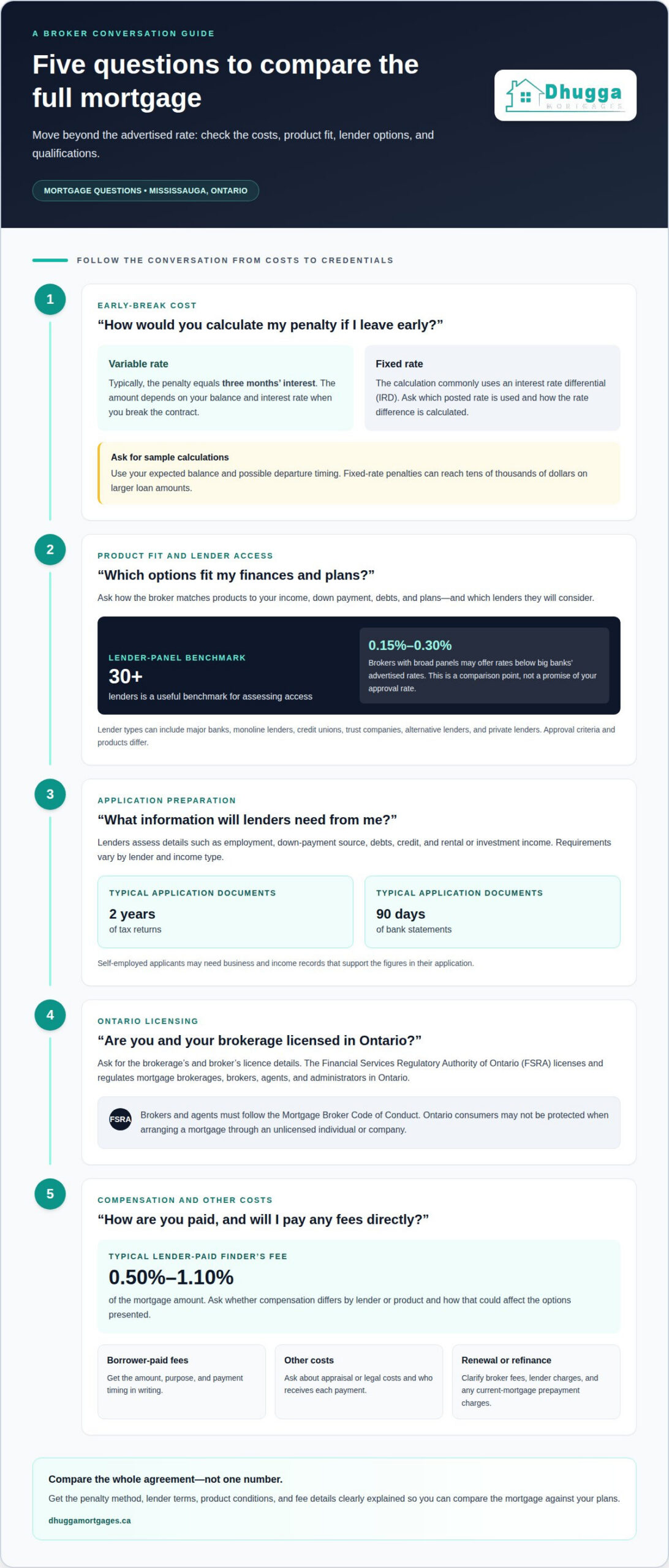
Ask for the exact early-break penalty calculation before choosing a mortgage rate. Variable-rate mortgages typically carry a penalty equal to three months’ interest. The amount depends on your balance and interest rate when you break the contract. Ask the broker to show the calculation using your expected balance and the lender’s terms. Then compare the cost with the potential savings from switching or refinancing.
Fixed-rate mortgages commonly use an interest rate differential, or IRD, calculation. The IRD is based on the posted rate when you took out the mortgage. Ask which posted rate the lender uses, how it calculates the rate difference, and whether the calculation changes over time. Fixed-rate and variable-rate mortgages can have different payout penalties. Low-rate or restricted products may also have harsher terms, so the lowest mortgage rate may not mean the lowest overall cost.
That example illustrates a variable-rate calculation, not a fixed-rate IRD. A fixed mortgage penalty can reach tens of thousands of dollars on larger loan amounts. Before you commit, ask for sample calculations based on your balance and when you might leave during the term.
Ask whether an adjustable-rate mortgage can be converted to a fixed rate and what conditions apply. Some adjustable-rate mortgages allow this switch, but the available fixed interest rate and any fees depend on the lender’s contract. A fixed rate can make payments more predictable; an adjustable rate changes as its underlying rate moves. Ask how a conversion affects your payment, remaining term, and prepayment privileges.
Get the answers in writing with the mortgage terms. Confirm the penalty method, how the lender calculates interest, and whether extra payments reduce the balance without a charge. These details matter if you expect to move, refinance, or make a lump-sum payment before the term ends. Compare flexibility as well as the advertised rate.
2. Are There Any New Mortgage Products That Better Suit My Situation?
A broker compares mortgage options from lenders beyond one bank’s product shelf. Ask how many lenders are on the panel and which types they include. A panel of 30 or more lenders is a useful benchmark when assessing access. Broad lender access may also create room to compare rates, eligibility rules, and features. Brokers with broad panels may offer rates 0.15% to 0.30% below big banks’ advertised rates. Treat that as a comparison point, not a promise of your approval rate.
Ask the broker to explain how each option fits your income, down payment, debts, and plans. Lender types can include major banks, monoline lenders, credit unions, trust companies, alternative lenders, and private lenders. Their approval criteria and mortgage products differ. For example, a variable-rate mortgage may suit someone comfortable with changing interest rates, while another product may better meet a need for payment stability. Compare the full terms, not just the advertised rate.
Documentation helps lenders assess your application consistently. Expect to provide details about employment, your down-payment source, debts, credit, and any rental or investment income. Typical application documents include two years of tax returns and 90 days of bank statements. Requirements vary with the lender and your income type. Self-employed applicants, for example, may need business and income records that support the figures in their application.
Ask your mortgage broker how they’ll submit your file, which lenders they’ll approach, and how they’ll compare each approval. Request a clear explanation of the recommended product’s rate, payment structure, conditions, and lender requirements. A broker’s lender panel is a resource, but the right match depends on how each lender assesses your circumstances. If you’re weighing different mortgage structures, you can discuss your mortgage options with a professional.
3. Are you licensed to broker mortgages in Ontario?
Ask for the brokerage’s and broker’s Ontario licence details before discussing an application. The Financial Services Regulatory Authority of Ontario (FSRA) licenses and regulates mortgage brokerages, brokers, agents, and administrators in Ontario. Brokers and agents must follow the Mortgage Broker Code of Conduct. Licensing matters: Ontario consumers may not be protected when arranging a mortgage through an unlicensed individual or company.
Ask how the broker is compensated and whether you’ll pay any fees directly. Mortgage brokers typically receive a lender-paid finder’s fee of 0.50% to 1.10% of the mortgage amount. That does not explain every cost tied to a mortgage transaction. Ask whether compensation differs by lender or product, and how that could affect the options presented. Request a clear explanation before proceeding.
Get any borrower-paid fee explained in writing before agreeing to services or submitting an application. Ask what the fee covers, when it becomes payable, and whether it applies if the mortgage doesn’t proceed. Also ask about other transaction costs, including appraisal or legal costs, and who receives each payment. A written breakdown helps distinguish broker compensation from lender or third-party charges.
Renewal and refinancing can raise different cost questions from a new purchase. Ask whether a renewal involves a broker fee, lender charge, or other expense, and who pays it. If you refinance, ask how prepayment charges on your current mortgage could affect the proposed option. Clarify whether a credit check is part of the process and how your application information is used. A suitable broker should explain the application process, relevant experience, and costs in plain terms. Keep the licensing, compensation, and fee answers together so you can compare the full arrangement, not just the mortgage rate.
4. What risks, penalties, and renewal costs should I ask about before choosing a mortgage
Ask for a clear explanation of the risks tied to the recommended mortgage, not just its interest rate. Confirm how payment changes could affect your monthly budget and what happens if your income or plans change. Mortgage terms can restrict prepayments and refinancing, limiting your options later. Ask which restrictions apply and how they affect a move, a lump-sum payment, or access to home equity.
Prepayment privileges may allow annual lump-sum payments or increases to regular payments. Lenders commonly allow annual lump sums of 10% to 20% of the original principal, but the exact privilege depends on the mortgage contract. Ask whether unused privileges carry forward, when the lender accepts extra payments, and whether exceeding a limit triggers a charge. These details determine how quickly extra funds can reduce your balance.
Plan for renewal before the current term ends. Canadian borrowers typically receive a renewal notice 4 to 6 months before the renewal date. Ask when to start comparing options, what the lender’s renewal offer changes, and whether switching lenders involves costs. Discuss a term length that fits your plans, including an expected move, income change, or need to refinance. A renewal is also a chance to review payment frequency and mortgage features.
Ask the broker to outline renewal costs, including any charges related to discharge, transfer, or refinancing. Have the broker explain how each cost affects the potential savings from a new rate or different term. Also ask whether the mortgage limits access to equity and what conditions apply if your plans change. A lower rate may not offset restrictive terms or switching costs.
Before choosing, get the risks, prepayment rules, and renewal steps summarized in writing. Compare the total cost and flexibility across the mortgage term, not only the first payment. To discuss how your renewal plans affect your options, talk through your mortgage renewal options.
Dhugga Mortgages: Mortgage Refinancing
Dhugga Mortgages offers Mortgage Refinancing for homeowners considering a change to their existing mortgage. It may be a useful next step when your current term no longer fits your plans, or when you want to explore refinancing alongside the costs and restrictions discussed above. Review the new mortgage’s rate, term, payment structure, and any charges for leaving your current agreement. The goal is to understand how the proposed option fits your needs, not to focus on the rate alone.
If managing existing debt is part of your plans, Debt Consolidation may also be relevant. Bring details about your current mortgage and financial goals so the options can be discussed in context. Contact Dhugga Mortgages to discuss your mortgage refinancing needs.
Make your next mortgage conversation count
Before deciding, consider what you need your mortgage to do next. Your plans may involve buying your first home, changing your financial structure, or keeping future flexibility. Sharing those priorities early helps focus the conversation on options that fit your circumstances, rather than on a rate viewed in isolation.
The questions to ask a mortgage broker in Mississauga can help you explain what matters most and understand the trade-offs before moving forward. Bring your timeline and key financial details to the discussion. If you’re preparing to buy your first home, ask how a First-Time Home Buyer Mortgage could fit your plans.
Contact Dhugga Mortgages to discuss your next step. A clear conversation can help you move ahead with greater confidence.
Frequently Asked Questions
What’s the best mortgage rate you can get me?
The right rate depends on your application and the mortgage that fits your plans. Among the questions to ask a mortgage broker in Mississauga, ask which rate applies to your specific term and mortgage structure, what conditions apply, and how long the quote remains available. Compare the payment impact and flexibility alongside the rate. A lower advertised rate may come with restrictions that matter to your plans.
What is the penalty for breaking my mortgage?
The penalty depends on your contract and when you leave. Request a lender payout statement for the date you’re considering, then compare leaving before a move with keeping the mortgage until its term ends. Ask what the payout figure includes and how long it remains valid. This gives you a decision-specific amount to weigh against the costs and benefits of changing your mortgage.
Are you licensed to broker mortgages in Ontario?
Mortgage brokering in Ontario is regulated by the Financial Services Regulatory Authority of Ontario, and brokers and agents must follow the Mortgage Broker Code of Conduct. Ask the individual and brokerage to explain their Ontario licensing status. Also clarify who will handle your application and explain recommendations. Make sure you understand these roles before sharing financial documents or authorizing an application.
What’s your strategy for my renewal, not just my closing?
A renewal strategy should account for your expected finances and housing plans during the next term, not just today’s rate. Ask how the broker will compare staying with your current lender against switching, including any transfer or discharge costs. If you expect to move or your income may change, bring that timeline into the discussion early. It can shape which term and features suit you.
Do the rates compete with the market?
Compare rates on a like-for-like basis: the same mortgage type, term, payment frequency, and prepayment features. Ask whether a quoted rate depends on your down payment, property, or application profile. Request a written comparison showing the rate alongside its conditions and restrictions. That makes it easier to assess whether the offer fits your budget and plans, rather than relying on a headline rate alone.
Which lenders will you shop, and why?
A lender shortlist should reflect how each lender assesses your application, not just the size of a broker’s panel. Ask which lenders suit your income, property, requested term, and available documents, and why each option is being considered. If more than one lender could fit, compare approval conditions and flexibility as well as rates. You’ll understand the reasoning behind the recommendation.