Jaspreet Dhugga – Mortgage Broker Brampton, GTA And Ontario



Buying a house in Canada as an immigrant: how much for a down payment
- Home
- Buying a house in Canada as an immigrant: how much for a down payment

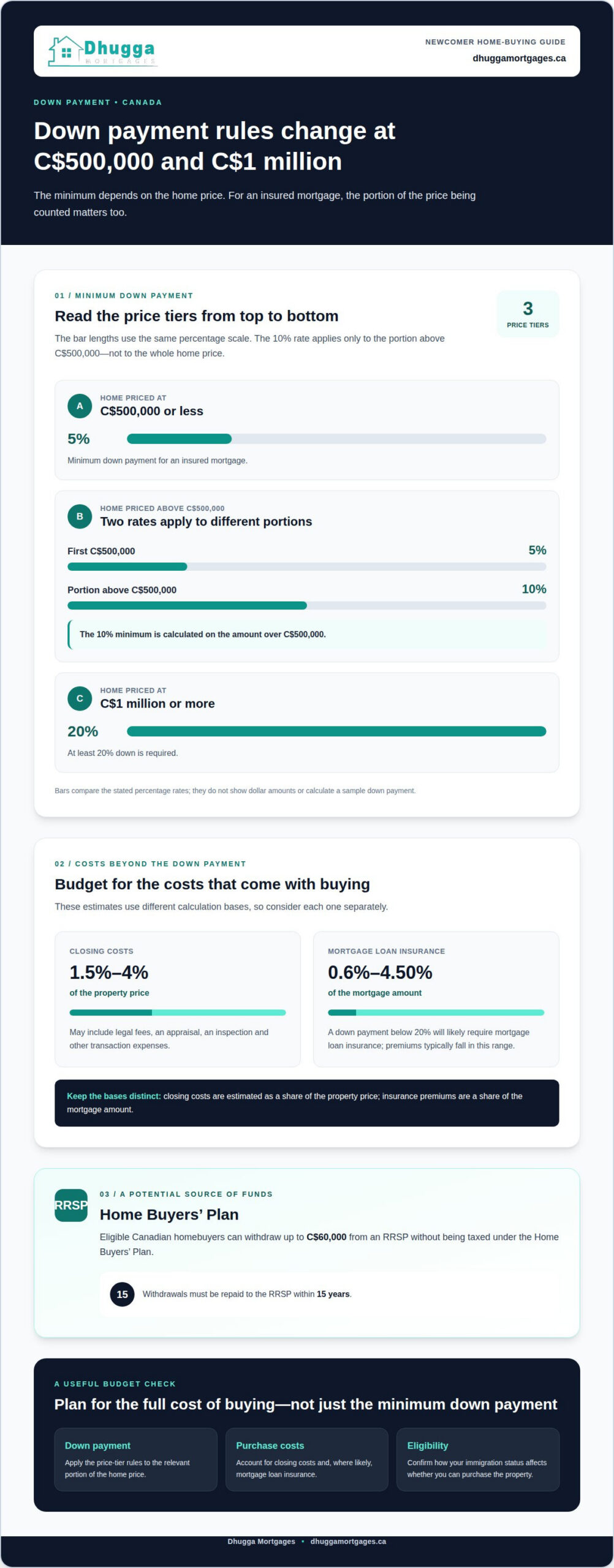
The smallest down payment isn’t always the best reason to buy. When buying a house in Canada as an immigrant, the minimum for an insured mortgage is 5% on a home priced at C$500,000 or less, plus 10% on the portion above C$500,000. A home priced at C$1 million or more requires at least 20% down.
That gives you a starting point, but your immigration status can affect whether you’re allowed to buy, and lenders may consider your Canadian credit history and documents when reviewing a mortgage application. Compare the costs and trade-offs of buying with the flexibility of renting. This guide covers down-payment rules, restrictions on purchases by non-Canadians, ways newcomers can demonstrate creditworthiness, and factors to consider when deciding whether to buy or rent.
Key Takeaways
- Confirm how your immigration status affects eligibility to purchase residential property in Canada before planning a move or making an offer.
- Compare the costs and flexibility of buying with renting, and learn how the Home Buyers’ Plan may support an eligible purchase. The Canada Revenue Agency says eligible homebuyers can withdraw up to C$60,000 from an RRSP without being taxed.
- Build a stronger mortgage application by understanding how Canadian credit history, proof of income and payment records can help demonstrate your ability to manage payments.
- See how New to Canada Mortgages can help you assess mortgage options when you’re ready to move from renting to buying.
Canadian restrictions on residential property purchases by non-Canadians
Eligibility to buy depends on your immigration status, the property’s location and any applicable exemptions. The rules affect some non-Canadians, not every newcomer.
Eligibility for Permanent and Temporary Residents
Eligibility means whether your status lets you purchase residential property under federal rules. Permanent residents can buy, while temporary residents may need to meet an exception. For a temporary resident working in Canada, an exception may apply if their work permit or work authorization has at least 183 days remaining at purchase. This distinction matters before you make an offer.
Exceptions to Purchase Restrictions
Exceptions allow some non-Canadians to purchase property in specific situations. The prohibition does not apply to residential property outside a Census Metropolitan Area or Census Agglomeration. A Census Metropolitan Area has at least 100,000 people overall, including 50,000 in its core; a Census Agglomeration has a core population of at least 10,000. The law also does not prevent a foreign state from buying residential property for diplomatic or consular purposes.
According to Department of Justice Canada, the Prohibition on the Purchase of Residential Property by Non-Canadians Act took effect on January 1, 2023, and the page describes its restrictions as lasting two years. The Government of Canada announced an intention to extend the prohibition to January 1, 2027. The Act prohibits non-Canadians from directly or indirectly purchasing covered residential property, with exceptions for prescribed circumstances and protected persons.
Can immigrants buy property in Canada in 2026? Yes, permanent residents can buy, and some temporary residents qualify for exceptions. Renting and occupying a home is not considered a purchase under the Act.
Do immigrants pay foreign buyer taxes or extra property taxes? Foreign buyer taxes can apply based on location and status. Ontario’s Non-Resident Speculation Tax is 25% for foreign nationals, while British Columbia’s foreign buyer tax is 20% in specified regions.
Home ownership does not grant permanent residency or change immigration status. A prohibited purchase can carry a fine of up to C$10,000. Non-resident owners may also face tax obligations connected to property ownership or rental income, depending on their circumstances.
Should I buy or rent a home in Canada?
Buying offers ownership and stability, while renting can preserve flexibility and savings. Compare your cash flow, how long you expect to stay and the full cost of each option.
Financial Readiness for Homeownership
Financial readiness means being able to manage mortgage payments and ongoing housing costs without exhausting available savings. It matters because ownership costs continue after the purchase, including maintenance, utilities and property taxes. Compare those expenses with rent and your income. Lenders may also consider how housing costs compare with gross monthly income when assessing affordability.
Eligible Canadian homebuyers can withdraw up to C$60,000 from an RRSP under the Home Buyers’ Plan without being taxed, according to the Canada Revenue Agency. This can support a purchase, but withdrawals must be repaid to the RRSP within 15 years. Renting may suit a newcomer whose location, income or plans are still changing.
Purchase and Closing Costs
Closing costs are expenses paid around the transaction, separate from the down payment. Budget for them before deciding what you can afford. Canadian home closing costs are estimated at 1.5% to 4% of the property price. They can include legal fees, an appraisal, an inspection and other transaction expenses.
A down payment below 20% will likely require mortgage loan insurance, with premiums typically ranging from 0.6% to 4.50% of the mortgage amount. Add these costs to your budget, then compare the result with rent and the flexibility you value. Discuss your home-buying plans as you weigh your options.
Credit history and mortgage documentation for newcomers
Buying a house in Canada as an immigrant starts with understanding how lenders assess your credit. A Canadian bank may not recognize credit history from another country, so local records can matter. Regular payments on credit cards and other accounts help build a Canadian credit profile. The guide recommends a score of at least 680 for newcomers seeking a mortgage. Keep clear records of payments and current financial commitments.
For newcomers without Canadian credit history, proof of on-time payments on public accounts for the last 12 months can help demonstrate creditworthiness. Lenders also assess income, debts, employment and down-payment funds. Organize supporting records, such as income documents and account statements, plus your work permit or other status documents where relevant. Consistent details make your financial position easier to assess.
Mortgage pre-approval helps estimate borrowing capacity before you make an offer. It typically protects the borrower’s interest rate for 60 to 120 days, but it isn’t final mortgage approval. Your finances and the property still matter. Mortgage loans are usually repaid over 25 years; a conventional mortgage may have an amortization period of up to 30 years. Mortgage terms are commonly three or five years, and interest rates depend on the mortgage and borrower.
Mortgage rates and home prices vary across Canada. Rates depend on the mortgage and your financial profile, while prices differ between local real estate markets. Compare the expected payment with your budget instead of relying on a city-wide figure.
To buy a house in Canada as an immigrant, first organize documents about your credit, income, debts and immigration status. Then seek pre-approval and set a purchase budget. Work with a trusted real estate team on the property and offer—such as Steve Kooner & Associates if you are searching in British Columbia’s Fraser Valley—and consult a mortgage advisor about financing. Make an accepted offer conditional on a professional inspection, then complete the mortgage process. A lawyer or notary transfers the home into your name. Whether you’re a temporary resident, permanent resident or Canadian citizen, your status and documents form part of the application.
Buying versus renting in Canada’s housing market
Buying can make sense if you expect to stay and can manage the full cost of ownership. Renting may suit a newcomer whose work, family plans or immigration status could lead to another move. For professionals evaluating cross-border opportunities or relocation to the United States, immigration legal resources such as mj-law.com can assist with navigating visa and residency pathways. Compare more than rent and the mortgage payment: ownership also brings property taxes, utilities, maintenance and home insurance. A home in Canada is a long-term financial commitment, not just a place to live.
Consider how financing fits your current circumstances. A mortgage payment includes principal and interest, while rent does not build ownership equity. Buyers also pay for repairs and bear the impact of changes in property value. Renting can leave more savings available for relocation, emergencies or building a Canadian credit profile. If you’re unsure how long you’ll stay, that flexibility may be more useful than owning.
For eligible first-time buyers, a First Home Savings Account is a registered way to save toward a qualifying home purchase. The Canada Revenue Agency sets its contribution limit at C$8,000 annually, and the lifetime contribution limit is C$40,000. This can help with purchase planning, but it doesn’t remove the need to budget for closing and ongoing ownership costs. Compare the savings timeline with your likely move date.
Make the decision with a side-by-side budget. List rent and tenant insurance, then compare them with mortgage payments, property taxes, utilities, maintenance and home insurance. Allow for possible repairs and changes in your housing needs. Mortgage loan insurance is another financing cost for some buyers, so include it when estimating ownership expenses. Buying may suit a stable income and a longer-term plan; renting may suit changing work or location needs. Neither choice is automatically better.
Set a practical threshold before viewing homes: decide what payment leaves room for savings and everyday costs. If ownership strains that budget, renting while you build savings or credit can be a sound choice. If the numbers fit and your plans support staying, explore a mortgage that matches your circumstances. Discuss your buying and renting options before making a commitment.
Dhugga Mortgages: New to Canada Mortgages
Dhugga Mortgages offers New to Canada Mortgages for newcomers exploring mortgage options and preparing to buy. This may be helpful if your Canadian credit history is limited or your income and down payment need to be assessed together. A mortgage review can clarify which financing options may suit your situation before you commit to a purchase.
If you’re buying your first home, First-Time Home Buyer Mortgages may also be relevant. If existing debt affects your available budget, Debt Consolidation may be worth discussing as part of your broader financial picture. The right option depends on your goals and circumstances.
Contact Dhugga Mortgages to discuss your home-buying plans.
Make your next move with a clear plan
A plan for buying a house in Canada as an immigrant should fit the life you’re building, not just the home you’re considering. Set a comfortable payment range, decide how much flexibility you need and choose a timeline that works with your plans. Then use those decisions to guide a focused conversation about mortgage options.
Dhugga Mortgages offers First-Time Home Buyer Mortgages, Mortgage Refinancing and Debt Consolidation. These options can support different stages of your housing journey, from preparing for a first purchase to reviewing your financing later. Discuss your goals and financial situation to take the next step with greater clarity.
Contact Dhugga Mortgages to discuss your mortgage options. A confident home-buying plan starts with a clear next step.
Frequently Asked Questions
How much do I need for a down payment in Canada?
For an insured mortgage, the minimum is 5% on a home priced at C$500,000 or less, plus 10% on the portion above C$500,000. A home priced at C$1 million or more requires 20% down.
What information can I provide for proof of employment in Canada?
Provide documents showing who employs you, your role and your current income. Examples include an employment letter, recent pay statements and, if available, an employment contract. Tax slips or notices of assessment can add context to your earnings. If you’re self-employed, organize business income records and tax documents so the lender can assess how your income is earned and documented.
What information should I provide to my lender or mortgage broker?
Share a clear picture of your income, regular expenses, outstanding debts, savings and down-payment funds. Include your employment details, immigration status and permit information where relevant. If you’re applying with a co-borrower, provide their financial details too. Be prepared to explain large deposits or transfers that form part of your down payment. Complete, consistent information helps the mortgage professional assess your application and identify any documents still needed.
What questions should I ask my lender or broker when getting pre-approved?
Ask what purchase budget and payment the pre-approval supports, how long its rate hold lasts and what conditions remain. Clarify whether approval depends on employment verification, down-payment documentation or a property review. Ask which mortgage features affect your choices, including payment frequency, interest type and prepayment options. Find out what changes to your income, debt or purchase price could require an updated financing assessment.
What are the Canada foreign buyer ban exemptions for temporary residents and newcomers?
Some temporary residents may qualify for an exception, but newcomer status alone does not create one. A qualifying student’s purchase price cannot exceed C$500,000; they must have filed tax returns for each of the five preceding taxation years and been physically present in Canada for at least 244 days in each of the five preceding calendar years. Protected persons are also exempt under the Act.
What down payment do newcomers need to buy a house in Canada?
The amount depends on the mortgage and the buyer’s status. Non-permanent residents authorized to work in Canada may be required to provide at least 10% down. The lender also considers income, credit history, debts and the source of the funds. Keep down-payment money traceable through account records, and separate it from funds reserved for other purchase expenses so your budget reflects the full transaction.