Jaspreet Dhugga – Mortgage Broker Brampton, GTA And Ontario



Mortgage Agent in Caledon for Rural Property Financing
- Home
- Mortgage Agent in Caledon for Rural Property Financing
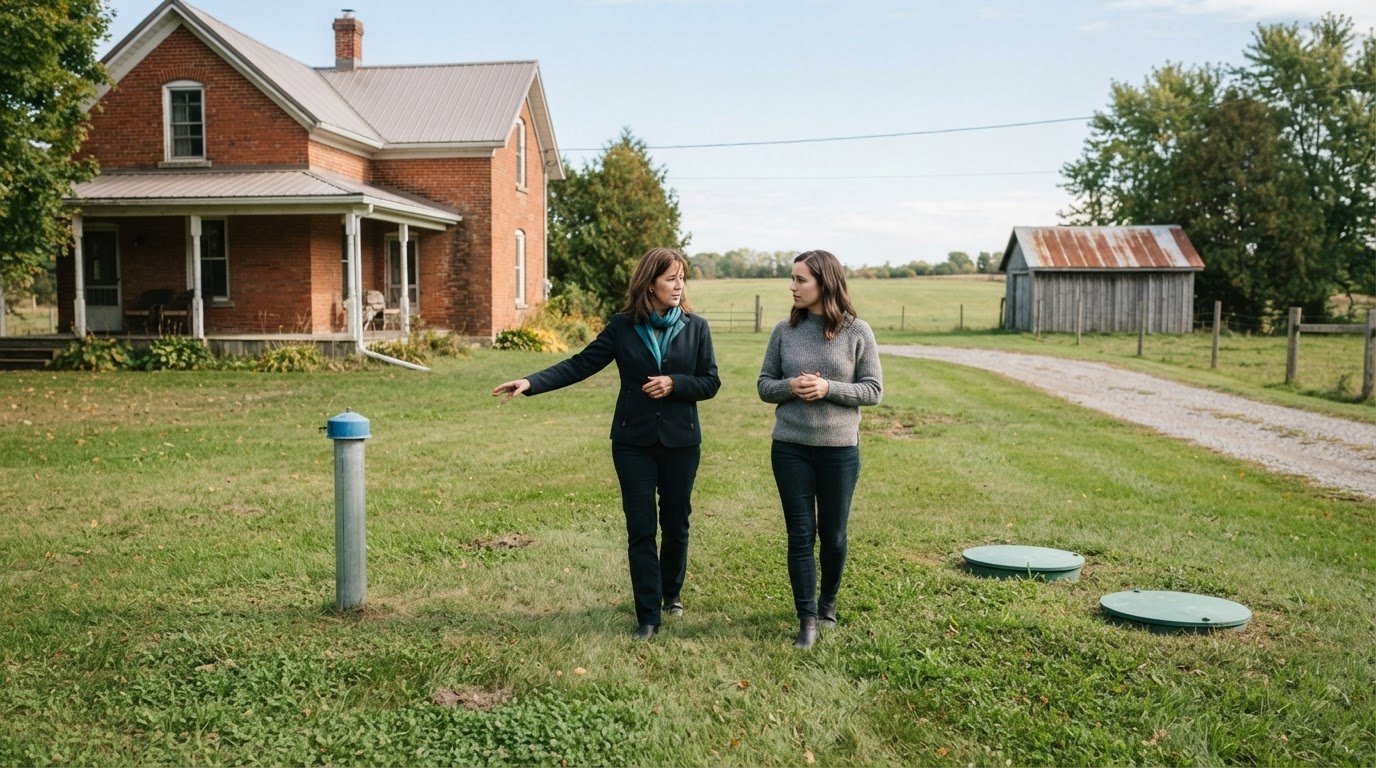
A rural or acreage property in Caledon can be financed, but the land and its services may affect a lender’s decision. A mortgage agent in Caledon can help you understand how well and septic systems, property use and the amount of land being financed may shape your options. Rural financing is not always assessed like a standard townhome purchase.
It’s reasonable to want clarity before making an offer, especially if you’re buying your first home or are self-employed. Pre-approval can help you understand your borrowing position, while an early property review can bring financing considerations into focus.
Here’s what to expect: how rural property financing works, what lenders may consider, which documents support pre-approval, and how mortgage options can suit first-time buyers and self-employed borrowers in Caledon.
Key Takeaways
- Rural financing can depend on property use, well and septic details, and how much land the lender will finance. Learn what to consider before committing to a purchase.
- Pre-approval helps clarify your borrowing position. See which financial and property details can help shape the application.
- Down payment rules differ by purchase price, while self-employed borrowers may need income documents that show how their earnings are assessed.
- Understand how banks and licensed mortgage professionals approach mortgage options, and when Dhugga Mortgages’ refinancing or buyer solutions may fit your needs.
Why work with a mortgage broker here?
Caledon’s rural properties and higher purchase prices can make mortgage planning more involved. A mortgage agent in Caledon can review your situation, compare mortgage options and identify property details that may affect financing.
Broker expertise and client testimonials
A mortgage broker reviews your income, down payment, credit profile and property details before presenting your application to lenders. For an acreage purchase, ask how the broker addresses land use, well and septic systems, and how much of the land a lender may finance.
When reading testimonials, look for specific examples, clear communication and relevant situations. A review describing a rural purchase or self-employed application can show how the broker handled practical challenges. Your mortgage agent in Caledon should explain the proposed approach in plain language.
According to Canada Mortgage and Housing Corporation, homes over $1.5 million require a 20% down payment.
Fixed and variable mortgage rates
As of June 2026, the best insured five-year fixed mortgage rates were near 4.04%, while the best five-year variable mortgage rates were near 3.35%. These are market benchmarks, not a personalized quote for each Caledon or GTA borrower.
Compare the rate with the mortgage term, payment structure and conditions. A fixed rate stays the same for its term, while a variable rate can change with its lending benchmark. Consider how each option fits your budget and comfort with payment changes.
Agent fees and lender commissions
Mortgage agent compensation and lender commissions vary by application and lending arrangement. Before proceeding, ask for written details of any borrower-paid fee, how the agent is compensated, and when a charge applies.
For a bridge between properties or a private mortgage, review the full terms and repayment plan alongside the rate. Clear written details help you compare the total commitment and understand how the compensation relates to your mortgage.
Risks and scam precautions
Be cautious of pressure to act before you understand the terms, unclear fees or promises made before your application is assessed. Read the written mortgage details, confirm the agent’s identity and licence through the Financial Services Regulatory Authority of Ontario’s public registry, and use a verified method to share sensitive documents.
Mortgage pre-approval and paperwork
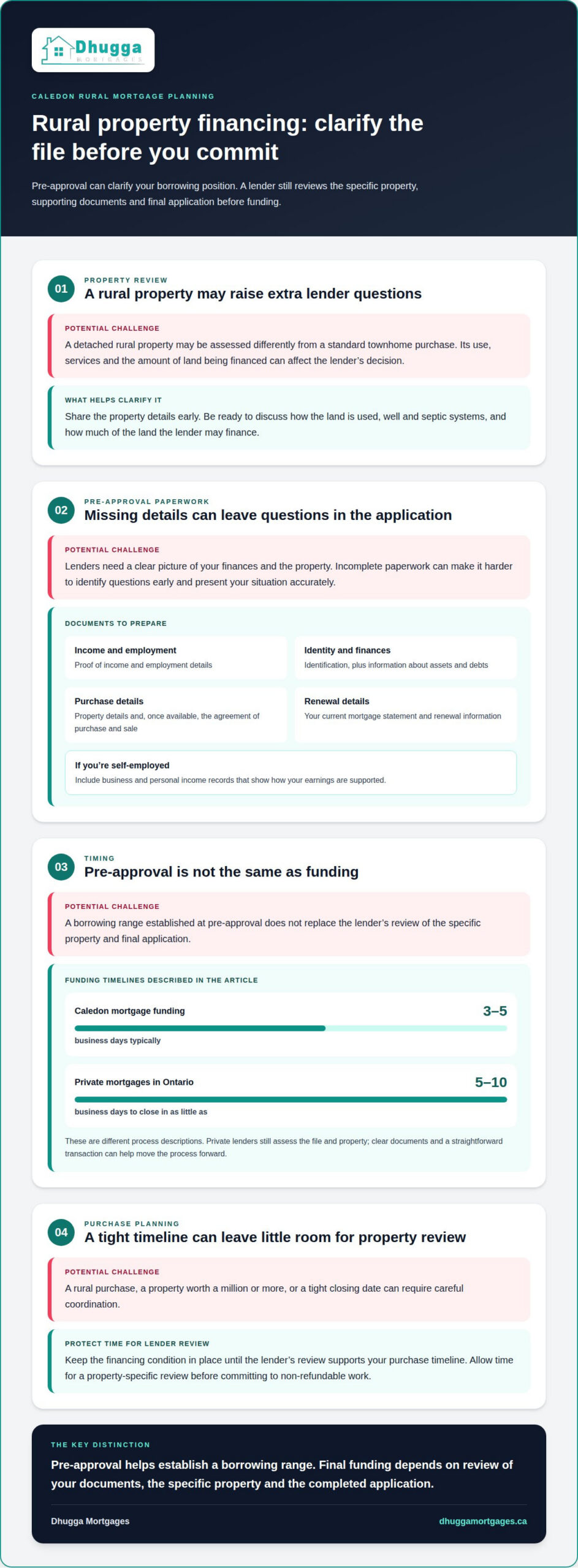
Pre-approval helps establish a borrowing range before you commit to a Caledon property. A mortgage agent uses your financial documents and property details to prepare your application and identify questions lenders may raise.
Documents to provide for mortgage pre-approval
Start with proof of income, employment details, identification, and information about your assets and debts. The agent uses these details to assess your application, review your credit and present your financial situation accurately to potential lenders.
Self-employed applicants may need business and personal income records that show how their earnings are supported. For a purchase, provide the property details and, once available, the agreement of purchase and sale. A detached rural property may prompt additional lender questions about its use, services or land.
For a renewal, include your current mortgage statement and renewal information. Complete paperwork helps the agent identify missing details early and prepare a file that reflects the property and your borrowing needs.
Approval and funding timelines
In Caledon, mortgage funding typically takes 3-5 business days. That timing is different from pre-approval: a lender still needs to review the specific property, supporting documents, and final application before funding.
Private mortgages in Ontario can close in as little as 5 to 10 business days. Private lenders assess the file and property, so clear documents and a straightforward transaction help move the process forward. A purchase involving a rural property, a property worth a million or more, or a tight closing date can require careful coordination.
Keep the financing condition in place until the lender’s review supports your purchase timeline. Before committing to non-refundable work, allow time for property-specific review. For a focused review of your paperwork and timing, discuss your mortgage pre-approval.
Mortgage solutions for first-time buyers and self-employed borrowers
First-time buyers and self-employed applicants may qualify through different mortgage pathways. Lenders assess the down payment, income evidence, credit, property type and requested borrowing.
First-time buyer mortgage solutions
For a typical Caledon home purchase, the minimum down payment is 5% on the first $500,000, according to Canada Mortgage and Housing Corporation. The portion above $500,000 has a different minimum, so the purchase price affects the total cash needed for closing.
Canada Mortgage and Housing Corporation says default mortgage insurance is required in Canada when the down payment is below 20%. A mortgage review can compare suitable options and account for insurance, closing costs and the buyer’s available funds.
Borrowing limits and loan-to-value ratios
Loan-to-value compares the mortgage amount with the property’s value. Lenders weigh the property type, borrower’s finances and down payment when setting borrowing limits. For a home equity line of credit, banks generally cap borrowing at 65% of a home’s value.
Private mortgage lenders may consider different loan-to-value limits, with ratios in Caledon reaching up to 85%. Equity, property condition and repayment plans shape the assessment. These figures describe different lending approaches, not guaranteed amounts for every property.
Self-employed borrower qualification
Self-employed applicants need income records that show how the business earns and supports their personal income. Lenders may review tax documents, financial statements, business activity and existing debts to understand income stability and available cash flow.
A mortgage agent can organize your file around your actual earnings and explain how lenders assess your documents. Clear records help connect your stated income with the business’s financial picture and the mortgage you’re requesting.
Ontario stress test and qualification rules
Ontario borrowers are assessed on their ability to manage mortgage payments under qualification rules, not just the payment at the offered rate. Lenders also consider income, debts, credit and housing costs when determining borrowing capacity.
That assessment matters for employed and self-employed applicants alike. For an accurate review of your down payment, equity or income documents, discuss your mortgage options.
Banks versus licensed mortgage professionals
In Canada, borrowers generally obtain a mortgage through a bank or a licensed mortgage professional. A bank assesses applications against its own lending options, while a mortgage professional can compare options from multiple lending institutions.
Licensed mortgage professionals offer access to hundreds of mortgage products and send millions of dollars in mortgage business each year to banks, credit unions, trust companies and other financial institutions. No single lender is best for every Caledon homebuyer. Compare the mortgage terms, income requirements, property criteria and repayment conditions that match your situation.
Banks, credit unions and monoline lenders are options to consider, but the lender’s fit matters more than the category. A rural purchase, self-employed income or a renewal may involve different lending criteria. Ask for a clear comparison of the proposed rate, term, payment structure and conditions before choosing.
To choose an Ontario mortgage agent, look for clear explanations, relevant experience and written disclosure of costs and compensation. Then use the Financial Services Regulatory Authority of Ontario (FSRA) public registry to check the agent’s licence status. Confirm that the name and business details match the person handling your application.
For homeowners, a mortgage decision can also connect with longer-term plans, such as an estate or a future move. Focus on how each option fits your current income, property and plans, rather than choosing based on the rate alone. This makes the comparison useful beyond the initial approval.
Bring your questions and property details into the conversation before committing to a lender. Discuss your mortgage options and get help comparing a route that fits your Caledon purchase.
Dhugga Mortgages: Mortgage Refinancing
Dhugga Mortgages helps homeowners explore mortgage refinancing when their current mortgage no longer fits their plans. A review can consider the existing mortgage, income, debts and goals, such as changing mortgage terms or consolidating debt. For first-time buyers and self-employed borrowers, the appropriate mortgage option depends on their financing needs and application details.
Bring your mortgage information and outline what you want the financing to achieve. That gives the review a clear starting point and helps identify which mortgage solution suits your situation. If you’re considering a change, contact Dhugga Mortgages to discuss your options.
Take the next step with a clear financing plan
Your next move is to connect the property and your finances to a mortgage plan that fits your goals. For a rural purchase, discuss the property details and financing timeline early. A mortgage agent in Caledon can help organize your application around your borrowing needs and explain the options for your situation.
Dhugga Mortgages offers First-Time Home Buyer Mortgages for eligible buyers, Mortgage Refinancing for homeowners reviewing their current mortgage, and Debt Consolidation for borrowers exploring ways to manage existing debts. The right starting point depends on what you want your financing to accomplish. Be ready to describe your plans, income sources and priorities.
Contact Dhugga Mortgages to discuss your next step. A focused conversation can help you move forward with greater clarity and confidence.
Frequently Asked Questions
Can you finance a rural or acreage property in Caledon?
Financing may be available, and the intended use of an acreage can shape a lender’s assessment. Explain whether you plan to live in the home, whether any buildings have a separate use, and whether the property supports business activity. These details help distinguish a standard residential purchase from one with mixed-use or other property considerations.
How much down payment do I need in Caledon?
The amount depends on the purchase price, applicable minimums and your financial plan. Plan how the down payment will be funded and documented. If part comes from a gift or the sale of an asset, mention that early so the application reflects the source. Leave room in your budget for other purchase-related expenses.
Need help with a mortgage?
Yes. Dhugga Mortgages can help turn a financing question into a focused application discussion. Start with your goal, whether you’re buying or changing an existing mortgage, and the parts of the process you want clarified. This gives the conversation a practical focus and helps identify the details that matter most to your situation.
Mortgage agents and brokers serving Caledon, Ontario
Dhugga Mortgages serves borrowers in Caledon, Brampton, Mississauga and Toronto. A broker can help present your application to lending institutions and explain how available options differ. Ask how changes to your purchase plans or completion date affect the file, and how property-specific questions are handled. Clear communication helps you judge whether the working relationship suits your needs.
What are the mortgage application requirements and documents in Ontario?
Requirements vary with each application, so organize your records clearly and explain any unusual details. For example, a recent income change, a large account transfer or different names across documents may need context. A concise explanation alongside relevant records can help the mortgage professional present your circumstances accurately to the lender.
How does a mortgage agent help you get pre-approved when buying a home in Caledon?
Dhugga Mortgages can arrange a pre-approval that includes an interest-rate guarantee for up to 120 days, subject to conditions such as written employment verification and a down payment from your own resources. The agent can help assemble the application for the lender’s assessment, giving you a clearer financing framework as you consider homes.