Jaspreet Dhugga – Mortgage Broker Brampton, GTA And Ontario



Finding a Trustworthy Mortgage Broker in Toronto: Fees and Credentials
- Home
- Finding a Trustworthy Mortgage Broker in Toronto: Fees and Credentials

The bank you already use isn’t your only route to a mortgage. A mortgage broker works with multiple lenders, helps compare mortgage options and negotiates on your behalf. Finding a trustworthy mortgage broker in Toronto means looking beyond the rate to licensing, clear fee explanations and experience with your type of application.
It’s reasonable to want a clear picture of who you’re working with and what the process may cost. Broker compensation can depend on the mortgage and lender, so understanding when a borrower may pay a fee is part of making an informed choice.
This guide explains what mortgage brokers do, how to check licensing in Ontario and what to consider if you’re self-employed or new to Canada. You’ll also learn how broker fees work, so you can assess your options and take the next step with a clearer plan.
Key Takeaways
- Understand how brokers compare mortgage options across lenders and help match them to your finances.
- Learn how Ontario licensing checks can help you assess a broker’s credentials.
- Know what to clarify about lender-paid compensation and when a borrower may face a fee.
- Explore how mortgage support may fit refinancing, self-employed applications, first-time purchases and debt consolidation.
What is a mortgage broker?
A mortgage broker works with lenders to find options suited to a borrower’s finances and goals. In Toronto, a broker can compare rates, terms and lender criteria, then help arrange the mortgage through closing.
Comparing Lenders and Mortgage Products
A broker compares more than the advertised mortgage rate. They consider lender criteria, the mortgage term, repayment features and your financial situation. A lower rate is not always the best fit if you value flexible prepayment options. Ask for a side-by-side explanation of available choices, including how each affects payments and what happens at renewal. Brokers can compare rates without asking each lender to pull a separate credit report.
Access to Lenders and Mortgage Options
Brokers work with multiple lenders, which can include banks and alternative lenders. Each lender may assess income, credit history and the property differently. This range can help you explore options when one lender’s criteria aren’t a fit. A broker may also consider alternative or B-lender options if you don’t qualify with an A lender. Available choices depend on your application and lenders’ criteria.
Broker Benefits and Lender Choice
Working with a broker brings lender options into one conversation. The broker helps assess affordability, identify potential mortgage options and explain trade-offs before an application moves forward. Ask how the recommended lender fits your priorities, not just how its rate compares. For standard A-lender mortgages, brokers are generally paid a finder’s fee by the lender. Clarify any borrower-paid fee before proceeding, and review the written mortgage terms before signing.
Brokers, Banks, and Mortgage Agents
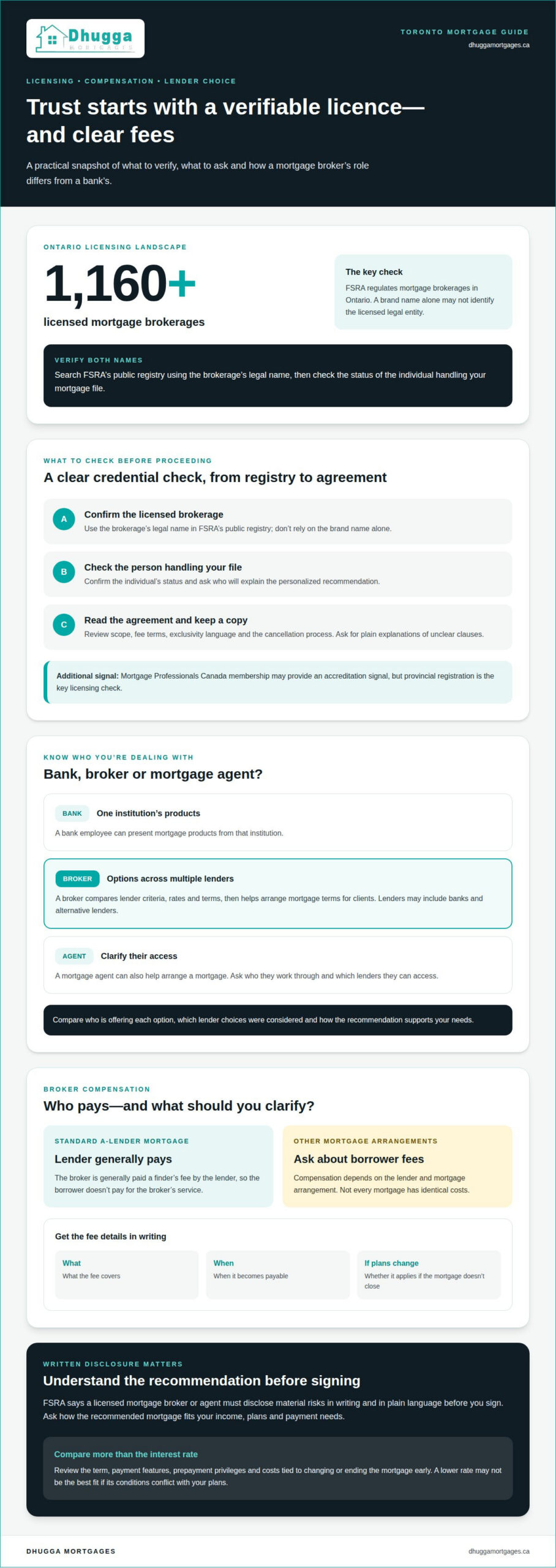
A bank employee can present mortgage products from that institution, while a broker works with multiple lenders and helps arrange mortgage terms for clients. A mortgage agent can also help arrange a mortgage; clarify who they work through and which lenders they can access. Compare the advice by asking who is offering each option, which lender choices were considered and how the recommendation supports your needs. Before you sign, the Financial Services Regulatory Authority of Ontario says a licensed mortgage broker or agent must disclose material risks in writing and plain language.
Mortgage broker licensing and accreditation
In Ontario, check a broker’s licence before discussing a purchase or refinance. Confirm the brokerage and the person handling your mortgage file through the provincial regulator.
Checking Ontario credentials
The Financial Services Regulatory Authority of Ontario (FSRA) regulates mortgage brokerages in Ontario. The province has over 1,160 licensed mortgage brokerages. Search FSRA’s public registry using the brokerage’s legal name, then check the individual’s status. A brand name alone may not identify the licensed entity. Mortgage Professionals Canada membership can provide an additional accreditation signal, but provincial registration is the key licensing check.
Use the same check whether you’re buying your first home or renewing for a different interest rate. Confirm the name on any documents matches the brokerage in FSRA’s registry. Then ask who will handle your application and explain the personalized recommendation. These steps help distinguish a regulated mortgage professional from someone whose credentials you can’t verify through Ontario’s regulator.
Disclosure and Suitability Protections
Before you sign, a licensed mortgage broker or agent must disclose material risks of the mortgage agreement in writing and in plain language, according to the Financial Services Regulatory Authority of Ontario. That gives you written information to review instead of relying only on a verbal explanation. For suitability, ask how the recommended mortgage fits your income, plans and payment needs. The explanation should connect the product’s terms to your circumstances.
Risks of Unlicensed Brokers and Agreements
An unlicensed person’s credentials won’t appear as an active licence in FSRA’s registry, making it harder to establish who is responsible for arranging your mortgage. Don’t share sensitive documents or proceed on verbal assurances alone. Before signing a broker agreement, read its scope, fee terms, exclusivity language and cancellation process. Ask for clear explanations of any clause you don’t understand, and keep a copy of the signed agreement.
For help considering a purchase or refinance, discuss your mortgage options with Dhugga Mortgages.
Broker compensation and fees
Mortgage broker compensation depends on the lender and mortgage arrangement. For a standard A-lender mortgage, the lender generally pays the broker a finder’s fee, so you don’t pay for the broker’s service. That doesn’t mean every mortgage has identical costs. Before proceeding, ask whether you’ll pay any broker fee and get the answer in writing.
Make the fee discussion part of the approval conversation. Ask what the fee covers, when it becomes payable and whether it applies if the mortgage doesn’t close. If an agreement includes a fee, read its terms alongside the lender’s mortgage offer. A clear explanation helps you understand the full cost before committing.
Don’t compare offers by interest rate alone. Check the term, payment features, prepayment privileges and any costs tied to changing or ending the mortgage early. A competitive rate may not be the best fit if its conditions conflict with your plans. For example, if you expect to sell before the term ends, understand how an early payout could affect the total cost.
Ask how the broker is compensated for each option presented. A lender-paid commission isn’t a borrower fee, but you can still ask how the recommendation fits your financial situation. Request a comparison explaining the rate, key conditions and trade-offs. Keep the written summary with your mortgage documents so you can refer to the same details during closing or renewal.
At renewal, review the new offer rather than assuming your current lender’s terms remain competitive. Ask what changes in the interest rate, payment and conditions, and whether switching creates costs. A broker can explain how available options compare with your renewal priorities. Before signing, make sure any broker fee and lender charges are separately identified, understood and included in your decision.
How do Toronto mortgage brokers compare with banks and mortgage agents?
The key difference is who can present mortgage options and negotiate them. A bank representative presents products from that bank. A mortgage broker can work with multiple lenders and help arrange mortgage terms for clients. Mortgage agents are also regulated in Ontario. When finding a trustworthy mortgage broker in Toronto, the person’s role and brokerage relationship matter as much as the title.
Think about what you need the mortgage to do. For a home purchase, you may prioritize payment stability or flexibility. At renewal, you may want to understand whether changing lenders fits your plans. A bank can explain its own offer, while a broker can discuss options from different lenders. Compare terms and conditions as well as the rate, so your choice reflects your priorities.
Finding a trustworthy mortgage broker in Toronto includes understanding how the recommendation was reached. Ask which options were considered, how the proposed terms support your goals and how the broker is paid. Request a written explanation. You can then compare it with a bank’s offer without overlooking differences in terms or costs.
Before signing, review the mortgage agreement and its written risk disclosures. The Financial Services Regulatory Authority of Ontario says licensed mortgage brokers and agents must disclose material risks in writing and plain language. Make sure you understand what those risks mean for your payments and plans.
Bring your income details, purchase or renewal priorities, and any current mortgage information to the discussion. That gives the conversation a clear starting point. You should leave understanding who is arranging the mortgage, which options were considered and why the recommended terms suit your needs. Discuss your mortgage options to move forward with a focused comparison.
Dhugga Mortgages: Mortgage Refinancing
Dhugga Mortgages helps homeowners review mortgage refinancing options when their current mortgage no longer fits their plans. Refinancing may be worth exploring if you’re reassessing payments, borrowing needs or how you manage existing debt. The right option depends on your mortgage details, finances and goals.
If you’re self-employed, income documentation can shape the mortgage discussion. Dhugga Mortgages offers Self-Employed Mortgages and Debt Consolidation. If you’re buying your first home, First-Time Home Buyer Mortgages may be a relevant starting point. Bring your mortgage details, income information and priorities to make the conversation focused.
If you’d like to discuss your mortgage needs, contact Dhugga Mortgages.
Make your next mortgage decision with clarity
A mortgage decision can shape more than a monthly payment. It can affect how much flexibility you have as your plans change. Before moving ahead, decide what matters most: predictability, room to adjust or a clearer path through a complex application. That priority gives your next conversation a practical focus.
If you’re finding a trustworthy mortgage broker in Toronto, a useful next step is to bring forward the questions that could affect your decision. Ask for the reasoning behind a recommendation, how its terms connect to your priorities and what you need to understand before signing. Clear answers help you make an informed choice without feeling rushed.
Dhugga Mortgages can discuss your situation and the mortgage options that may fit your plans. Contact Dhugga Mortgages to discuss your options. Start with your priorities, and take the next step with confidence.
Frequently Asked Questions
What’s the advantage of working with a broker?
A broker can help you assess affordability early and explore mortgage choices across lenders. This can be useful before making an offer, when you need a clearer sense of what may fit your finances. Brokers can also compare rates without having each lender pull your credit report separately. Ask for a shortlist explaining how each option fits your priorities, not just its rate.
How do I verify a mortgage broker is licensed in Ontario?
Search the Financial Services Regulatory Authority of Ontario (FSRA) public registry using the broker’s name and brokerage name. Confirm the licence status and that the brokerage details match the documents you’ve received. If you’re speaking with an agent, look up that person as well. Save the names and registry details so you can compare them with the agreement before signing.
How can I check a Toronto mortgage broker’s disciplinary history and complaints?
Search FSRA’s public information using the exact names of both the individual and brokerage. Look for published disciplinary or enforcement decisions, and note the date, outcome and parties named. A complaint or allegation is not the same as a formal finding. If a record appears, ask the broker for a written explanation and compare it with the regulator’s published account.
What credentials and professional memberships should a trustworthy mortgage broker have in Canada?
In Ontario, prioritize the required provincial licence and confirm it through FSRA. Mortgage Professionals Canada membership can be an additional professional credential to consider, but it doesn’t replace checking provincial status. Ask what the membership represents and whether it applies to the individual or brokerage. For a Toronto mortgage file, match the person’s name to the Ontario registry entry.
How are mortgage brokers paid in Ontario, and what fees might borrowers pay?
For standard A-lender mortgages, the lender generally pays the broker a finder’s fee. Ask whether your application involves a borrower-paid broker fee, when it would be due and whether it applies if the mortgage doesn’t close. Get the details in writing before proceeding. Also distinguish any broker fee from lender or third-party costs associated with the mortgage transaction.
What questions should I ask a mortgage broker before signing an agreement?
Ask which lenders and mortgage options will be considered, how the recommendation fits your finances and how the broker is compensated. Have the broker explain the agreement’s scope, any exclusivity terms, cancellation process and possible borrower fees. Ask what happens if the mortgage doesn’t close. Read the written answers alongside the agreement, and make sure you understand every commitment before signing.