Jaspreet Dhugga – Mortgage Broker Brampton, GTA And Ontario



Mortgage Pre-Approval in Brampton: Compare Rates and Options
- Home
- Mortgage Pre-Approval in Brampton: Compare Rates and Options

The lowest advertised rate isn’t the only number that matters when you’re buying or refinancing in Brampton. A mortgage pre-approval in Brampton can help you understand potential rates and financing options before making your next move. The lender’s assessment depends on factors such as your credit, income and down payment.
Compare more than the rate: mortgage terms and your ability to qualify also shape the options available. A credit check and complete supporting documents help the lender assess your application.
Learn how rate comparisons work, what to expect from a credit check and which documents may be needed. Dhugga Mortgages helps Brampton buyers and homeowners review mortgage options and prepare their applications, whether they’re buying or refinancing. The process begins with your finances and property plans, then considers mortgage options suited to your situation.
Key Takeaways
- Compare mortgage options by looking beyond the advertised rate to the term and qualification requirements.
- Understand how a credit check fits into an application and how broker support can help review lender options.
- Prepare documents that show your income, finances and down payment source to support the assessment.
- Plan the application and funding steps around your purchase or refinance timeline, including the documents and lender review involved.
Comparing mortgage rates and credit checks
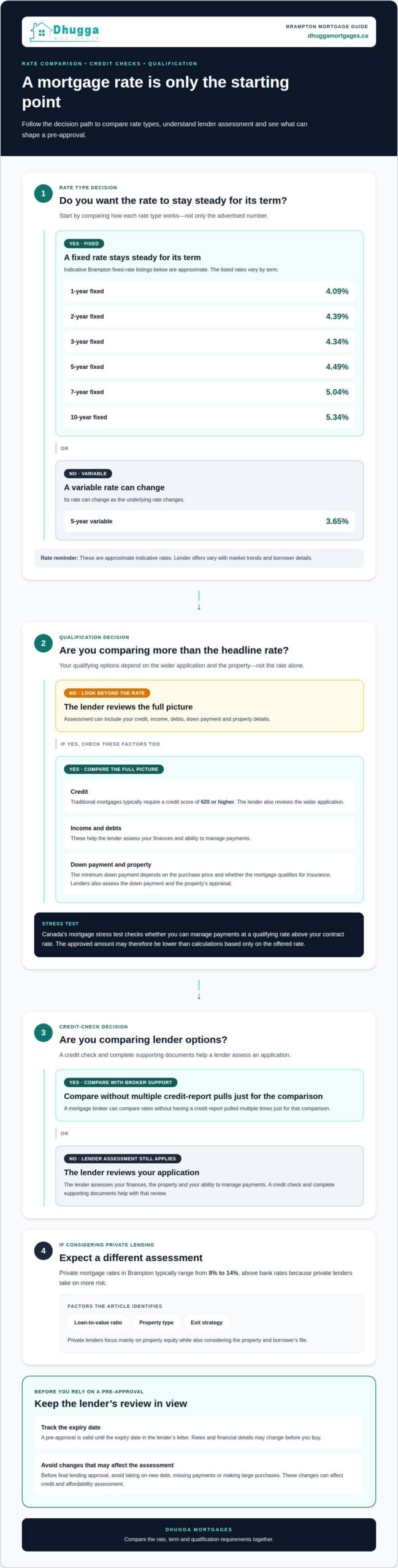
Compare more than the headline rate. Lenders assess credit, income, debts, down payment and property details before deciding which lending options fit. A mortgage broker can compare rates without having a credit report pulled multiple times just for the comparison. Traditional mortgages typically require a credit score of 620 or higher, but the lender also reviews the wider application.
Indicative Brampton rates include 4.49% for a five-year fixed mortgage and 3.65% for a five-year variable mortgage. Other listed fixed rates are 4.34% for three years, 4.39% for two years, 4.09% for one year, 5.04% for seven years and 5.34% for ten years. These rates are approximate. Lender offers vary with market trends and borrower details. A fixed rate stays steady for its term; a variable rate can change as its underlying rate changes.
Private mortgage rates in Brampton typically range from 8% to 14%, above bank rates because private lenders take on more risk. Indicative private rates vary by mortgage type: a two-year private first mortgage is listed at 6.99%, while a two-year private second mortgage is 8.99%. One-year private first and second mortgages are listed at 5.99% and 8.49%, respectively. Loan-to-value ratio, property type and exit strategy affect the assessment.
The minimum down payment for a Brampton home depends on the purchase price and whether the mortgage qualifies for insurance. Lenders assess your down payment alongside your income, credit and the property’s appraisal.
Canada’s mortgage stress test assesses whether you can manage payments at a qualifying rate above your contract rate. As a result, the amount a lender approves may be lower than calculations based only on the offered rate.
A pre-approval is valid until the expiry date in the lender’s letter. Keep track of that date, as rates and financial details may change before you buy.
After pre-approval, avoid taking on new debt, missing payments or making large purchases. These changes can affect your credit and affordability assessment before final lending approval.
Mortgage application and broker support
Banks, credit unions and mortgage brokers offer pre-approval options in Brampton. For a mortgage pre-approval in Brampton, Dhugga Mortgages can submit your application to suitable lenders and coordinate the review. Broker support can be useful when your income, credit history or property plans don’t fit a standard bank application. The lender still assesses your finances, the property and your ability to manage payments.
Mortgage brokers are licensed by their province, and licensing rules vary across Canada. In Ontario, work with a provincially licensed broker. Mortgage Professionals Canada members agree to follow the association’s ethical and professional guidelines. Its Accredited Mortgage Professional designation isn’t required, but it provides an additional professional credential. These details can help you understand a broker’s role and standards.
A broker can compare lending options and explain differences in terms, qualification requirements and repayment structures. For a mortgage pre-approval in Brampton, Dhugga Mortgages gathers your application details, including income, debts and bank statements, then presents your file to potential lenders. This support can be useful if you’re self-employed, refinancing or considering whether home equity could support another mortgage. The lender makes the approval decision.
Private mortgage support can suit borrowers whose applications need a different assessment. Private lenders, including Applewood Funding Inc, focus mainly on property equity, while also considering the property and borrower’s file. Dhugga Mortgages can help present these details and explain the proposed terms. Treat private lending as a short-term option, with a clear plan for repayment or transition to another mortgage.
Mortgage brokers are paid by the lender that provides the mortgage, so their service is free to the borrower. Any applicable lender or broker fees for a private mortgage are disclosed in writing before you commit. Ask for the proposed terms and payment obligations in writing, then review how they fit your budget. For help organizing an application and reviewing options, discuss your mortgage application.
Banks, credit unions and mortgage brokers in Brampton offer pre-approval; Dhugga Mortgages can submit your application to suitable lenders.
Documents needed to review mortgage options
A complete application gives lenders a clearer view of your income, debts, down payment and property plans. Required documents vary with your work situation and whether you’re buying, refinancing or seeking a private mortgage. A mortgage calculator can help estimate affordability, but lenders assess your supporting records, not just an estimate. Dhugga Mortgages organizes your file and identifies gaps before submission.
For employed applicants, income records may include recent pay statements, an employment letter and tax documents. Bank statements help show regular deposits, savings and existing payments. If you’re refinancing, provide current mortgage details and property information so lenders can assess your existing debt and the requested change.
- Income: Provide records that show how you earn and receive income, including employment or business documents relevant to your situation.
- Assets and debts: Include bank statements and records of loans or other regular payments to help explain your financial position.
- Purchase funds: Provide statements and transaction records showing where the down payment came from and how funds moved.
- Property details: Share the purchase or refinance information available, so the lender can assess the property and mortgage request.
Self-employed applicants should provide two years of tax returns and statements for mortgage assessment. These records show income over time and give lenders a basis for reviewing business earnings. Dhugga Mortgages can organize the figures and clarify how your income supports the application.
Source records matter when funds have changed hands. In a Brampton purchase funded by physical bullion proceeds, the down-payment source was documented with purchase and sale invoices, wire-transfer proof and bank statements. The example shows how transaction records connect an asset sale to the funds used for a home purchase.
Submit clear, complete records, and document unusual deposits or transfers to show their source. Consistent names, dates and amounts make the flow of funds easier to follow. An organized file helps lenders assess your application and identify any additional information they need.
Mortgage application and funding process
The application moves from financial review to a lender decision and, if approved, funding for closing. In Brampton, Dhugga Mortgages can coordinate these steps and explain what you need to provide.
Getting Pre-Approved in Brampton
A mortgage broker reviews your income, debts, down payment and bank statements, then matches your application with potential lenders. Dhugga Mortgages can explain financing options, including private mortgages when a conventional route doesn’t fit. For buyers in Brampton and the wider Toronto area, the property and purchase details also shape the lender’s assessment.
Consider the proposed rate alongside the term, payment structure and conditions. Dhugga Mortgages can clarify what the pre-approval covers and what information the lender still needs. This helps you plan an offer and prepare for the next stage without treating an initial estimate as final funding.
Pre-Approval and Final Approval
No. Mortgage pre-approval doesn’t guarantee final approval. It reflects an initial review of your finances, while the lender assesses the specific property and complete application before funding. A change in income, debts, credit or property details can affect that later decision.
After an offer is accepted, the lender may require an appraisal and updated statements to assess the property and confirm your file. Keep your finances stable and respond promptly to document requests. Final approval depends on the lender’s review of you and the property, not solely on the earlier pre-approval.
Timing matters. Residential mortgage closing commonly takes 30 to 45 days. For a Brampton new build, start arranging financing six to nine months before closing, and well before the final three weeks, when options may be more limited. Commercial financing can take longer because appraisal, property use and lender review add steps.
Private mortgages in Ontario can close in 5 to 10 business days. That faster route may suit an urgent financing need, but borrowers should understand the terms and have a repayment or exit plan. Discuss your pre-approval and funding plan to prepare for the next steps.
Dhugga Mortgages: Mortgage Refinancing
Dhugga Mortgages helps homeowners in Brampton review mortgage refinancing options when their current mortgage no longer fits their plans. Refinancing may be relevant if you want to reassess your mortgage or explore debt consolidation. The application review considers your income, existing debts, property details and goals, helping you understand potential options and the steps toward funding.
If you’re buying your first home, self-employed or considering debt consolidation, Dhugga Mortgages offers First-Time Home Buyer Mortgages, Self-Employed Mortgages and Debt Consolidation. The right option depends on your circumstances and the lender’s assessment. A clear review can help you understand what information is needed and how refinancing compares with your current arrangement.
For a straightforward conversation about your mortgage plans, contact Dhugga Mortgages.
Make your next mortgage move with a clear plan
A mortgage pre-approval in Brampton is a planning tool, not the final step in securing financing. Use it to clarify your budget and mortgage priorities, then keep your plans and financial details consistent as you move toward an offer or refinancing decision.
Your next step depends on your goal. Whether you’re preparing to buy, reviewing your current mortgage or considering how debt fits into your finances, Dhugga Mortgages can help you explore relevant options. A focused conversation brings your priorities and application details together, helping you know what to discuss as the process moves forward.
Bring your questions and the details of your plans. Contact Dhugga Mortgages to discuss a practical path forward. With a clear plan and professional guidance, you can approach your next mortgage decision with greater confidence.
Frequently Asked Questions
Buying or refinancing in Brampton?
Buying in Brampton calls for a purchase pre-approval; refinancing starts with reviewing your current mortgage, property and reason for changing it. A purchase file focuses on affordability and the home you plan to buy. A refinance file also considers existing mortgage obligations and the purpose of the requested financing. Keep your goal clear, since it shapes which lender options may fit your situation.
Can I use basement apartment rent to help me qualify?
Basement apartment rent can support qualification when a lender accepts the rental income and the unit and income are documented. In Brampton, second units must be registered with the City to be legal. A lease, rent records and unit information help the lender assess the arrangement. The lender determines how rental income factors into its calculations.
What income does a Brampton purchase need?
There’s no single income figure required for every Brampton purchase. The amount depends on the home’s price, your down payment, existing monthly debts and mortgage terms. For example, two households considering the same property may qualify differently if one has more debt or a different income structure. The lender assesses the complete household application, not salary alone.
What documents are required for mortgage pre-approval in Canada?
Required documents depend on whether you’re buying or refinancing and how you earn income. A file typically includes identification, income records, information about savings and debts, and details relevant to the property or existing mortgage. Provide complete, readable documents, with names and dates consistent across records. Explain unusual deposits with paperwork showing their source.
How much income do I need to qualify for a mortgage in Brampton?
The income required depends on the mortgage amount and your full financial picture, so salary alone can’t determine qualification. Lenders consider recurring debt payments and housing costs alongside income. Variable, contract or self-employed earnings also need records showing how the income is earned and received. Accurate details help the lender assess what payment fits your application.
Do mortgage pre-approval rates differ between lenders, and can they be negotiated?
Yes, mortgage rates differ between lenders, and a broker can compare offers without multiple credit pulls just for comparison. You can ask whether a lender will review a competing offer or adjust its terms, but any changes depend on the lender’s assessment. Compare more than the rate: payment features, penalties, term and conditions also affect which offer suits your plans.