Jaspreet Dhugga – Mortgage Broker Brampton, GTA And Ontario



Land Financing in Ontario for Down Payments and Loan Timelines
- Home
- Land Financing in Ontario for Down Payments and Loan Timelines
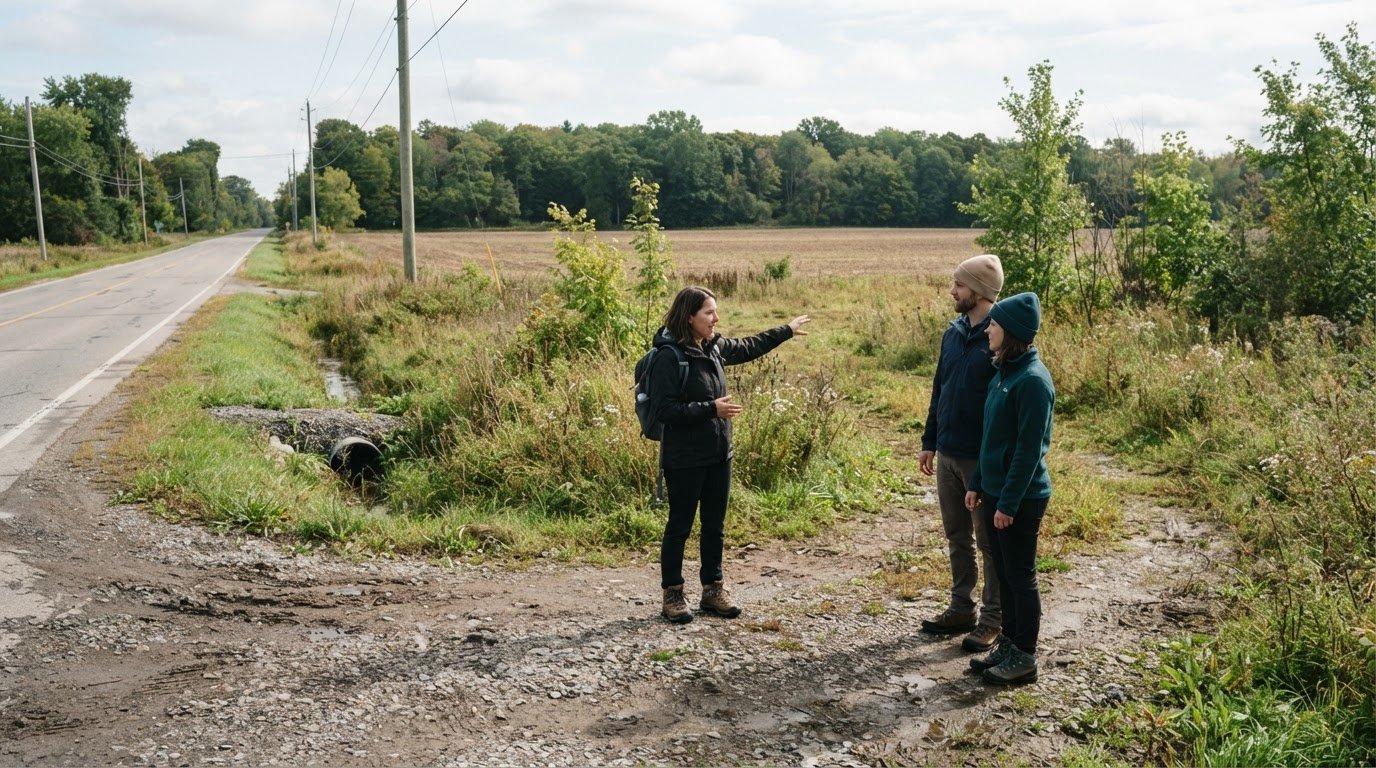
Yes, you can finance land in Ontario, but the property’s access and services can shape the down payment. For land financing in Ontario, a serviced vacant lot typically requires 25% to 35% down, while an unserviced lot may require 30% to 50%. Raw land may require 50% or more. Lenders also weigh factors such as road access, location, utilities and development plans.
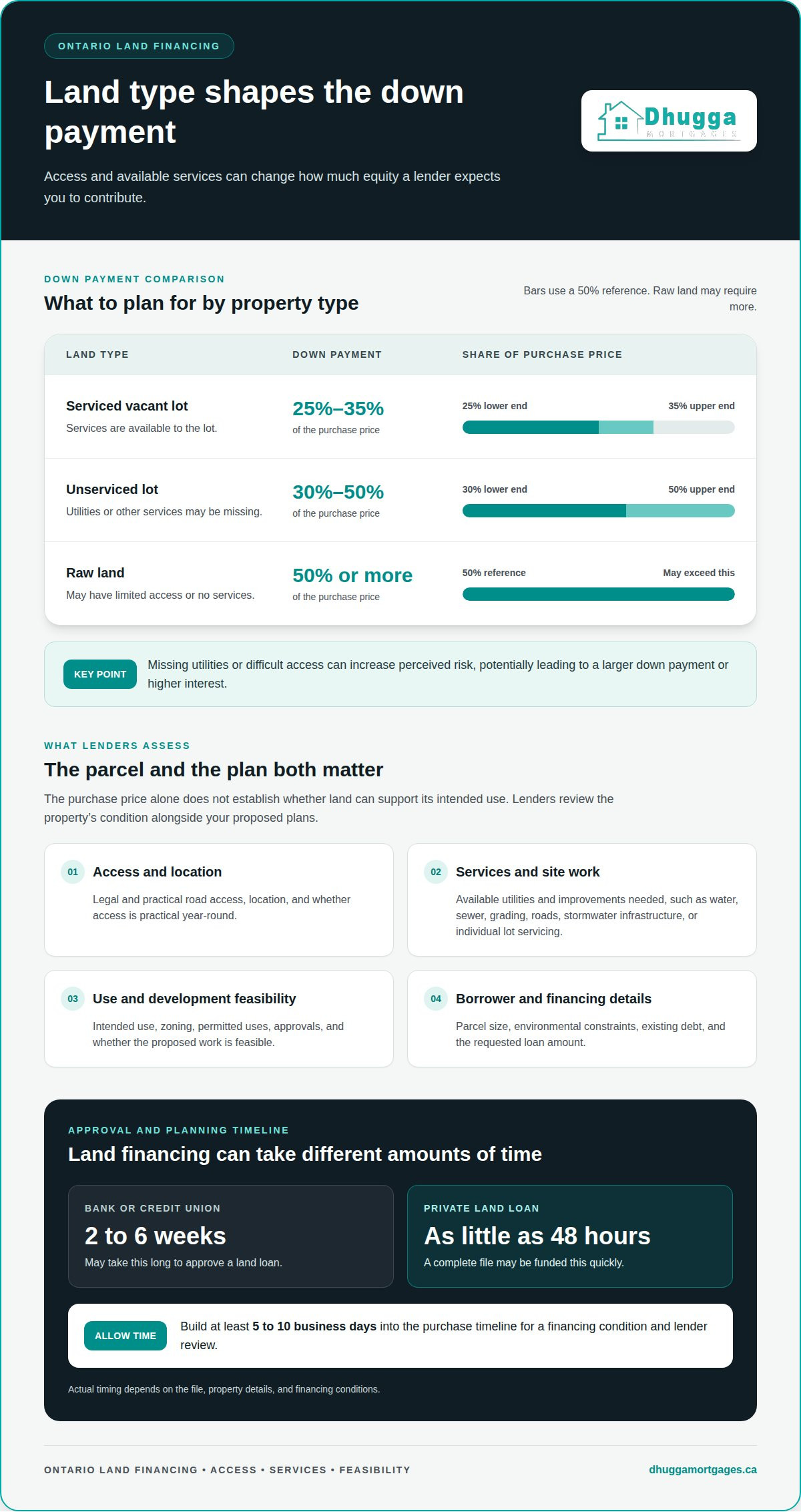
Land purchases can involve a different review and timeline than buying a completed home. A bank or credit union may take 2 to 6 weeks to approve a land loan, while a complete private land loan file may be funded in as little as 48 hours.
If you’re assessing a vacant lot or rural parcel, this guide explains how land acquisition loans work, what lenders consider when setting down payments, and how access and servicing can affect approval. You’ll also learn what can influence closing timelines, so you can plan your next steps with a clearer understanding of the financing process.
Key Takeaways
- Assess legal and practical road access, available services, zoning and development feasibility before planning a purchase.
- Build a financing condition into your purchase timeline; buyers are advised to allow at least 5 to 10 business days.
- Prepare for lenders to assess the land’s location, servicing, environmental constraints, your existing debt and proposed plans.
- For eligible farm purchases and building work, the Canadian Agricultural Loans Act Program has a loan cap to understand before you plan your financing.
Can I finance raw land with no road access or services?
Yes, raw land can be financed, but a parcel without road access or services can be harder to finance. For land financing in Ontario, lenders assess legal and practical access, location, parcel size, servicing, environmental constraints, existing debt and the requested loan amount. Limited access or missing utilities can increase perceived risk, potentially leading to a larger down payment or higher interest. A land mortgage may support a purchase for building, redevelopment, rezoning or future development.
For immediate development, connect the land purchase to a clear plan. Lenders consider the property’s current condition and whether the proposed work is feasible. For example, a buyer planning to build a home may need to account for road access, water, sewer and utility connections, as well as well and septic feasibility where relevant. These factors show what must happen before construction can proceed. Zoning, permitted uses and applicable approvals also affect development potential, even on serviced land.
Servicing can involve more than bringing utilities to a lot. Site work may include grading, road construction, water and sewer connections, stormwater infrastructure, utility installation and individual lot servicing. These improvements can require capital before building starts. A land financing request may include servicing work, but lenders also weigh the parcel and proposed plans. Identify the improvements needed, how they relate to the development, and whether access is practical year-round.
Borrowers holding land for future development face a different planning question: how will the property be used and financed while they wait? Land loans can support land banking, land assembly, refinancing or equity take-out. For a parcel without road access, a future plan may depend on securing practical access and resolving servicing needs. Lenders assess these constraints alongside zoning and approval status. The purchase price alone does not establish whether the land can support its intended use.
Before making an offer, organize the property details and development plan into one financing file. Include the parcel’s access, available services, intended use, zoning information and known environmental constraints. Then set a financing condition that allows time for the lender’s review. For buyers in Brampton and the GTA, this can help surface access or servicing issues before committing capital to land that may need substantial preparation.
How fast can a private land loan close?
A complete private land loan file in Ontario may be funded in as little as 48 hours. A bank or credit union may take 2 to 6 weeks to approve a land loan. Closing speed depends on the file, property details and financing conditions. Allow at least 5 to 10 business days for a land purchase financing condition, giving time for lender review and required reports.
Financing differs by property and plan. A serviced lot may support a larger loan than raw land, while building plans require lenders to assess both the land’s current condition and the project’s feasibility. Canadian land loans usually finance 50% to 80% of accepted land value, depending on location, servicing and lender. Private lenders may offer loan-to-value ratios up to 65% to 75%.
Private first mortgage rates in Ontario generally start around 7% and can reach the low teens for riskier land. Lender fees commonly run around 2% of the loan amount, and terms often last 12 months, with some extending to 24 months. These mortgage rates and costs differ from conventional residential financing. A broker can help organize the application around the land, borrower equity and repayment plan.
The borrower supplies the balance, plus applicable closing costs. Ontario land transfer tax on a C$300,000 vacant lot is C$2,975. If a C$400,000 vacant land sale is taxable, HST amounts to C$52,000.
Farm financing has separate eligibility and equity rules. Under Canada’s CALA program, beginning farmers generally contribute at least 10% of eligible costs as equity; existing farmers generally contribute at least 20%. Banks, credit unions and private lenders offer land financing in Ontario, with options shaped by property risk and the borrower’s plans. For an application discussion, connect about land-loan financing.
Land acquisition financing
Ontario buyers can use a bank or credit union land loan, private financing, or eligible farm-program financing. The right route depends on the parcel, its intended use, available equity and the lender’s underwriting. For land held with other properties, a blanket or inter-alia mortgage may secure financing across multiple parcels.
Start by matching the financing request to the purchase plan. A lender reviews the property, location, parcel size, access, servicing, existing debt and requested loan amount. For residential development, explain how zoning, permitted uses and required approvals relate to the proposed build. A plan for future construction differs from a purchase for immediate development because both the property’s current condition and the project’s feasibility shape underwriting.
Land assembly has its own financing structure. If an Ontario project involves several parcels, financing may be secured against multiple properties through a blanket or inter-alia mortgage. This can connect funding to the assembly rather than treating each vacant lot as a separate purchase. Repayment planning matters, too. Common strategies include selling the land, refinancing or moving to construction financing as the project advances.
Farm buyers may also consider the Canadian Agricultural Loans Act Program. According to Agriculture and Agri-Food Canada, loans for land purchase and building construction or improvement are capped at C$500,000. This program is designed for eligible agricultural purposes, so distinguish farmland acquisition and farm-building work from a residential real estate project.
Before ordering a new appraisal or other financing reports, speak with the lender about the application. A land purchase financing condition should allow at least 5 to 10 business days, while a bank or credit union may take 2 to 6 weeks to approve a land loan. Build that timing into the offer. Then organize the parcel details, intended use, zoning information, servicing needs and repayment strategy. A clear file helps underwriting focus on the land’s value, its development path and the requested capital.
Lender risk and down payment requirements
Land lenders generally ask for more equity than lenders financing completed homes. In Ontario, down payments commonly range from 30% to 50%, with higher amounts for remote or inaccessible parcels. A serviced vacant lot typically needs 25% to 35% down; an unserviced lot may need 30% to 50%. Raw land may require 50% or more.
The property’s condition drives much of the lending risk. Lenders consider location, parcel size, road access, services, environmental constraints, existing debt and requested loan amount. A lot with practical access and servicing may present a clearer lending case than a remote parcel without utilities. Zoning, permitted uses and development approvals also affect whether the intended use is feasible.
Borrower details matter, too. Lenders review credit, income, existing obligations and the funds available for a down payment. Prepare a clear account of the purchase purpose and any planned development. For example, a borrower seeking land for a future home should explain how the parcel’s access, zoning and services fit that plan. Strong equity can help address property risks, but it does not replace a review of the land itself.
When conventional lending does not fit, an alternative financing structure may be considered. Homeowners may also explore a Home Equity Line of Credit as a possible source of funds, subject to available home equity and approval. Keep land financing separate from assumptions about future construction funding. The land’s current value, condition and repayment plan remain central to the lender’s assessment.
To prepare, organize the purchase details, proof of down payment, income information, debt commitments and available land records. Explain access, servicing and intended use in the same file. This gives lenders a practical view of both borrower capacity and property risk. Discuss your land financing options and the factors shaping your down payment.
Dhugga Mortgages
Dhugga Mortgages helps Ontario borrowers understand how a land purchase fits their broader mortgage and financing plans. Turn to the brokerage to review your borrowing profile, especially if self-employed income or an existing mortgage affects your next steps. The right approach depends on the property, your financial position and how you plan to use the land.
For buyers also arranging a home purchase, First-Time Home Buyer Mortgages may be relevant. If you already own property, Mortgage Refinancing or a Home Equity Line of Credit may help you assess options tied to available home equity. Self-Employed Mortgages can address income documentation considerations for eligible borrowers. These options support broader mortgage planning, but do not replace a land lender’s assessment of access, services, zoning or the parcel itself.
Bring your purchase timeline, land details and financing goals into the discussion. Contact Dhugga Mortgages to discuss your next step.
Make your next move with a clear plan
Think beyond the purchase itself. Consider how buying land fits alongside your mortgage obligations, household cash flow and future property goals. A broader view of land financing in Ontario can help you decide how the purchase fits your priorities and what financial flexibility you want to preserve. Set out your goals before committing capital, including how the land supports your plans and what other financial commitments need attention.
Dhugga Mortgages can help you consider related mortgage decisions through First-Time Home Buyer Mortgages, Mortgage Refinancing and Debt Consolidation. These offerings may be relevant when a home purchase or existing debt forms part of your wider financial picture. Bring your goals and current commitments to the conversation to keep the next steps focused and practical.
Contact Dhugga Mortgages to discuss your mortgage plans and move forward with greater clarity.
Frequently Asked Questions
Can You Get a Mortgage for Land?
Yes, lenders can provide mortgages for vacant land, although approval depends on the property and borrower. Financing may cover a parcel intended for building, redevelopment or future use. For example, a Brampton buyer purchasing land before construction should be ready to explain the intended use and how the purchase fits their financial plans. A land mortgage is different from financing an already completed home.
How much down payment do I need to buy land in Ontario?
Plan for a larger down payment than you might need for a completed home. In Ontario, land down payments generally range from 30% to 50%, and raw land may require 50% or more. Servicing, access, location and the lender’s assessment influence the amount. Keep funds available for purchase-related costs beyond the down payment, so your budget covers more than the lender’s required equity.
What down payment is required for vacant land financing in Ontario?
For a serviced vacant lot, the typical down payment is 25% to 35%; an unserviced lot may require 30% to 50%. Raw land may call for 50% or more. “Vacant” describes land without a completed home, not its servicing or development status. A vacant parcel in Mississauga with services can present a different lending profile from remote, unserviced acreage.
What interest rates and loan terms do Ontario land loans typically have?
Private first mortgage rates in Ontario generally start around 7% and can reach the low teens for riskier land. Private land loans commonly have a 12-month term, with some extending to 24 months. The property’s location and condition affect lender risk, so a parcel’s profile matters alongside the borrower’s finances. Compare the interest rate and term with your intended repayment plan.
How do lenders assess and approve land financing in Ontario?
Lenders assess both the borrower and the parcel. They consider credit, income, existing debt, requested loan amount, location, parcel size, access, services and environmental constraints. They also review whether zoning and the proposed use support the buyer’s plans. For a Toronto-area purchase, organize the property information and financing request together. A clear file helps lenders evaluate the land’s current condition and intended use.
Can you get an Ontario mortgage or construction loan to buy land and build a home?
Yes, land purchase financing can be paired with a plan to build, but lenders assess the land and proposed construction. Some Canadian construction loans may provide uninsured financing of up to 80% of a home’s estimated value upon completion. That figure applies to certain construction loans, not automatically to the land purchase. Buyers in Caledon or Brampton should distinguish land funding from later construction financing.